
Autumn has well and truly arrived. Despite the inevitable rain and blustery days, I’ve always loved the distinct seasons we get here in England. By the time one is drawing to a close, I’m ready to move on to the next — ready for a change in pace, whatever that might be. There’s something reassuring about that steady cycle of change; it keeps things moving and reminds me that renewal is never far away.
This year, that sense of renewal feels particularly important. After a challenging summer for the business, the arrival of autumn has been a reminder that things move forward, that nature resets, and so can we.
The fields are green again, the grass returning with real vigour after the long, dry summer. Around us, many farmers are still making some much-needed silage for winter feed after a tough growing season, but we’ve taken the opportunity to reseed many of our pastures. With the warm and wet start to autumn, the seedlings are already sprouting — a hopeful sign for next year’s grazing season.
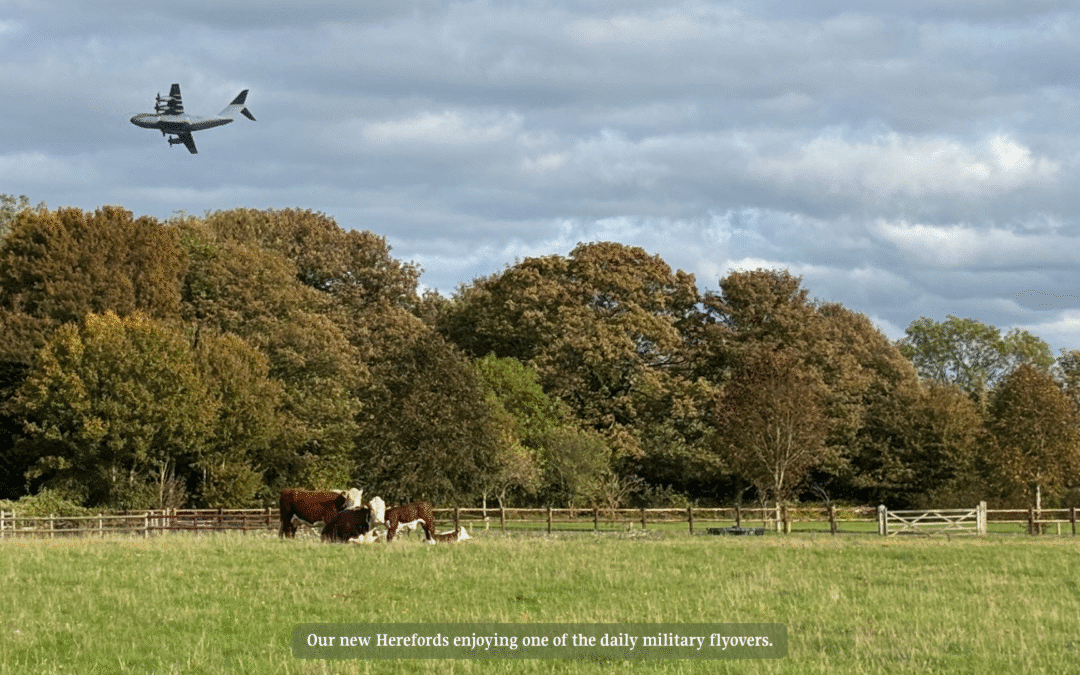
We also had a lovely surprise on the farm: an autumn calf. Most of our calves arrive in spring, but one of our heifers — a first-time mum — must have lost her calf last winter and got back in calf soon after. She’s now proudly raising her little one, and we’ve even brought in another cow and calf to keep them company in the paddock by the Farm Shop Drive. Watching them grow through the winter will be a real joy.
Earlier this month, we paid a visit to my cousin Darren over at Ivy House Farm in Beckington to collect his beautiful organic pumpkins. They’ll take centre stage at our pumpkin patch this half-term, alongside our Harvest at the Farm event. With the trees shedding their brown leaves, a crisp chill in the air, and pumpkins and squash decorating every corner, it really does feel like autumn has settled in. The return of our Sunday roasts in the Farm Kitchen completes the picture — hearty, comforting food to match the season.
One thing I’ve learned about retail and hospitality is that if you’re not moving forward, you’re moving backwards. Progress takes constant training, investment, and creativity — even when times are tough. After a summer that didn’t quite deliver the results we’d hoped for, we’re channelling that energy into something positive: a long-overdue refresh of the Farm Shop. Over the next couple of weeks, our butchery and deli will be getting a makeover. We apologise in advance for any small disruptions while the work is underway, but we can’t wait to reveal the results.
Our aim is to do a better job of sharing the stories behind our food — the farmers, the seasons, and the craft that goes into everything we make and sell. We hope to have everything ready before the end of the month, just in time for the festive season.
Lastly, I wanted to share a delicious recipe that perfectly captures this time of year. It’s from Julius Roberts’ wonderful book The Farm Table, which I can’t recommend enough. I tried one of his recipes last week using our own Italian sausages from the butchery — and although Tamara looked a little sceptical when I told her what I was cooking, it got a firm thumbs-up once it reached the table!
It’s hearty, rustic, and full of flavour — the sort of dish that fills the kitchen with warmth and makes you glad to stay in by the fire.
SAUSAGE & FENNEL STEW WITH POLENTA
Serves 4
You’ll need:
- 6 good-quality sausages (Italian or your favourite from the butchery)
- 2 tbsp olive oil
- 1 onion, finely chopped
- 3 garlic cloves, crushed
- 1 tsp fennel seeds
- 1 tsp chilli flakes (optional, for a touch of heat)
- 1 fennel bulb, thinly sliced (keep the fronds for garnish)
- 2 x 400g tins chopped tomatoes
- 100g Kalamata olives, pitted and halved
- 5 anchovy fillets, finely chopped
- 125ml dry white wine
- Sea salt and freshly ground black pepper
For the Polenta:
- 170g polenta (quick-cook or traditional — check your packet for timings)
- 30g butter
- 50g Parmesan cheese, finely grated
- Sea salt and black pepper
How to make it:
- Brown the sausages. Heat 1 tbsp of olive oil in a large frying pan over a medium heat. Add the sausages and cook until golden all over (about 5–7 minutes). Remove and set aside.
- Build the base. In the same pan, add another tablespoon of olive oil along with the onion, garlic, fennel seeds and chilli flakes. Cook gently until soft and fragrant, about 5 minutes. Pour in the wine to deglaze the pan, scraping up any bits from the bottom.
- Add the flavour. Stir in the chopped tomatoes and a splash of water, then add the sliced fennel, olives and anchovies. Season well, reduce the heat to low, cover and simmer for 20–25 minutes until the fennel is tender.
- Finish the stew. Return the sausages to the pan and cook for another 10–15 minutes until everything is rich, glossy and full of flavour.
- Make the polenta. Check your packet instructions for the correct amount of milk or water to use. Cook the polenta gently, stirring until smooth and creamy, then stir in the butter and Parmesan. Season to taste.
- Serve. Spoon the creamy polenta into bowls, top with the sausage and fennel stew and scatter over a few fennel fronds. A hunk of good crusty bread on the side won’t go amiss.
For me, that’s what autumn is all about — cooking with what’s in season, slowing down, and enjoying good food together.
Autumn has brought its fair share of mud, mess and drizzle — but also colour, calm, and a sense of purpose. The farm, the food, and the community that gathers around both remind me why we do what we do. Here’s to new beginnings, hearty meals, and the promise of a strong season ahead.
All the best,
