This year marks a fairly significant milestone for our family. It has been 50 years since my dad arrived at Hartley Farm.
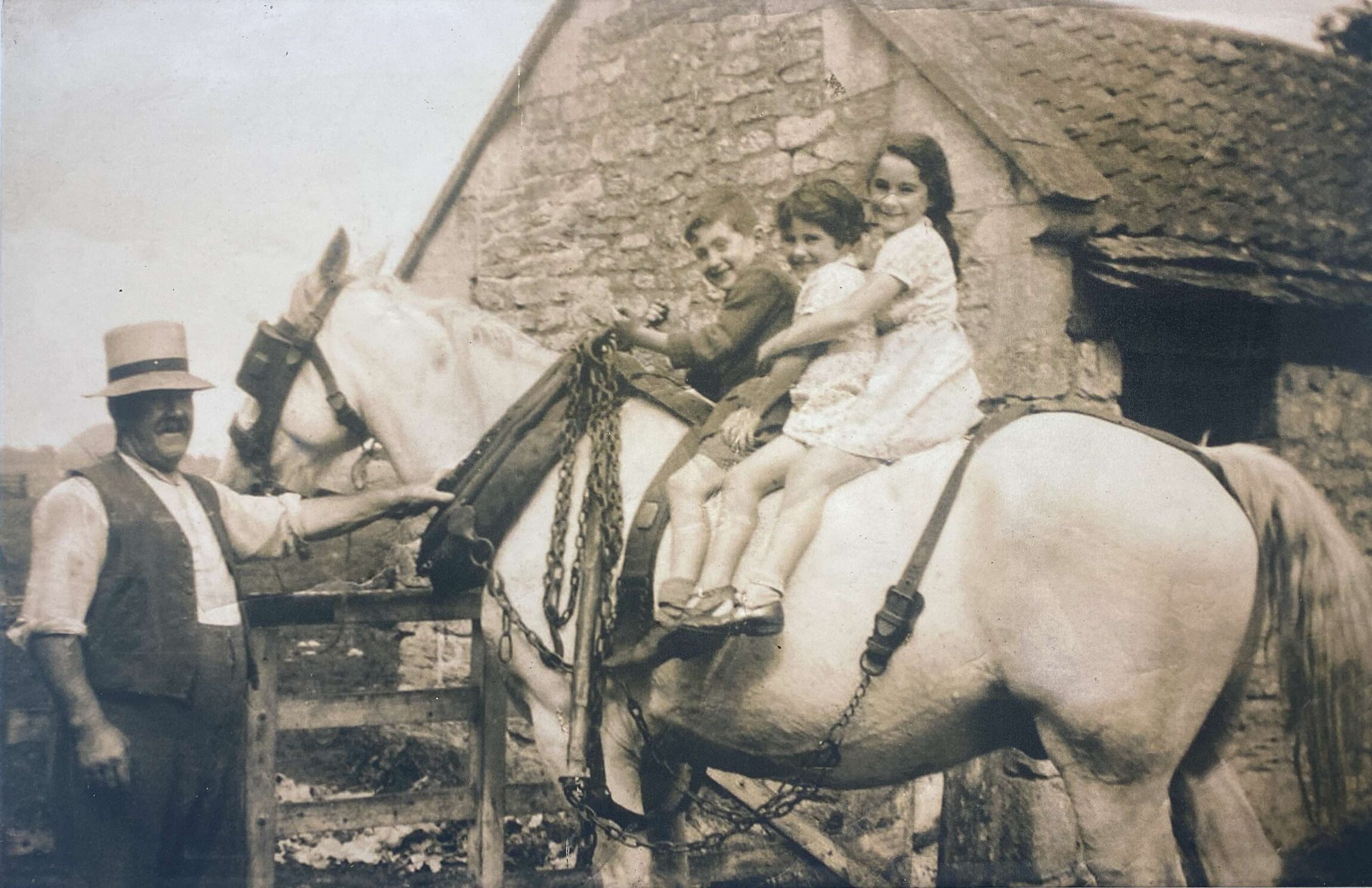
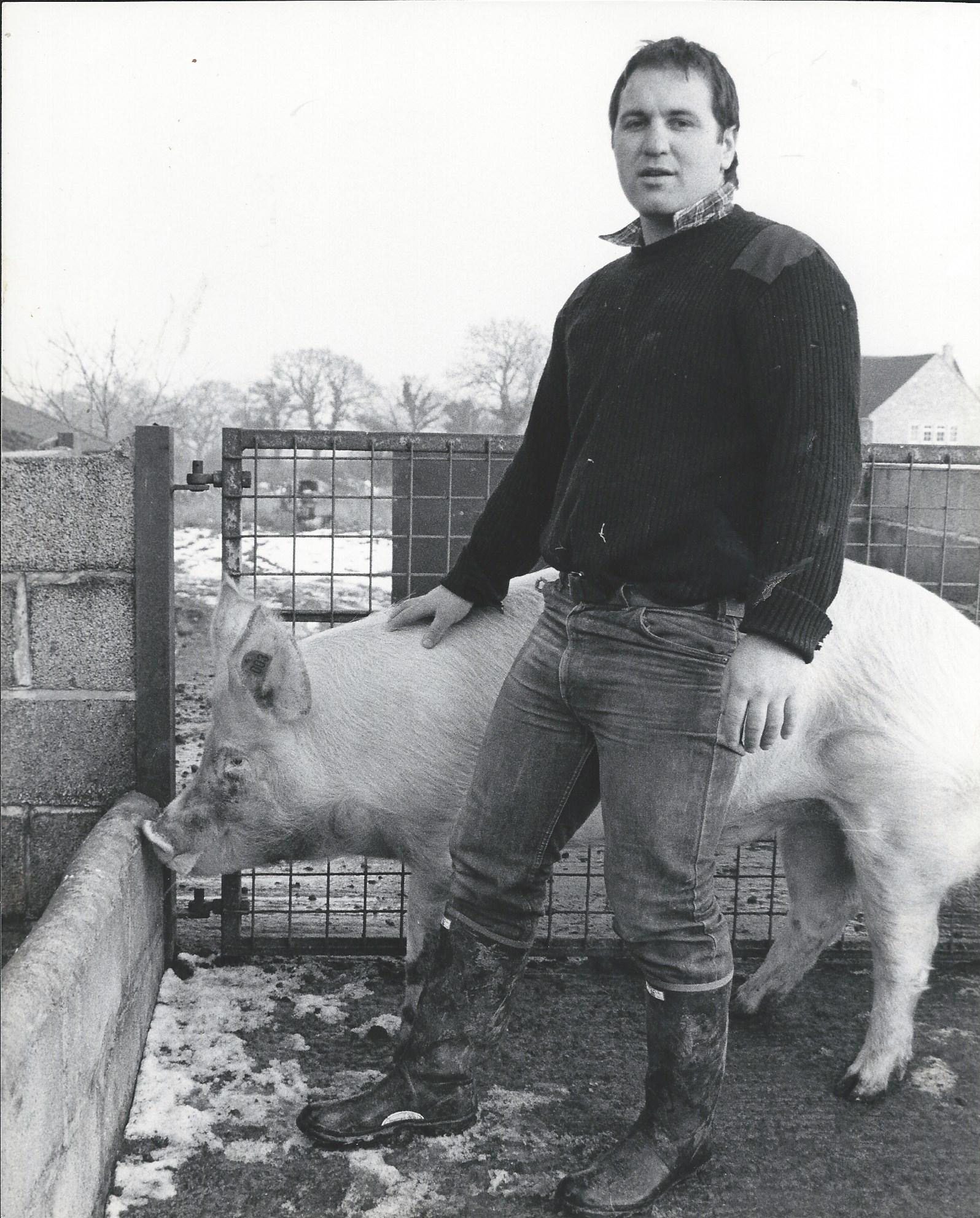
Our family had already been farming in Winsley for generations, at neighbouring Church Farm and also just down the lane at Parsonage Farm. But in 1976, when Hartley Farm came onto the market, at just 20 years old, my father Richard, with the support of my grandparents, Bert and Jean, was given the opportunity to start his own farming journey across the fields from where he grew up.
Fifty years later, we’re still here.
There’ll be plenty more from us about that over the coming months, but it seemed appropriate to start with Dad himself. Last year he was asked to write a piece for the Winsley Weaver, our parish magazine, which was celebrating its own 50th anniversary, reflecting on how farming and the village had changed during that time.
As we’ve welcomed quite a few new readers to the Journal recently, I thought this week was a good opportunity to go back to the beginning and share a little of our family’s story.
Fifty years at Hartley – by Richard Bowles
When I came to Hartley Farm in 1976, at the age of 20, farming looked very different to the industry we know today.
My family had farmed in Winsley for generations, mainly at nearby Church Farm and Parsonage Farm. When Hartley came up for sale, my father Bert supported me in taking the opportunity to farm for myself. It was a big step at that age, but we took it – and never really looked back.
The changes during the 50 years since have been extraordinary.
Technology has revolutionised both farming and the beautiful Cotswold landscape surrounding our village. Half a century ago agriculture was still a significant local employer and much of the machinery was relatively simple. The Fordson Major tractor, which now sits on display at Hartley Farm Shop, cost a few hundred pounds and offered very little in the way of operator comfort. Today’s tractors can cost hundreds of thousands of pounds and contain technology we could hardly have imagined then.
Productivity has changed enormously too. An acre of good land might once have yielded 1–1.5 tonnes of wheat; today it can produce more than four tonnes.
Winsley Parish itself once supported around a dozen farms primarily concerned with food production. Today only a handful remain, many of them having diversified, while the lanes, tracks and footpaths that were once principally part of a working agricultural landscape are increasingly shared with walkers, cyclists and those enjoying the countryside.
In the years following the Second World War, food security was paramount. Britain joined the EEC in 1973 and the Common Agricultural Policy encouraged farmers to increase production. Cheap oil made fertilisers and agricultural chemicals readily available and land that had previously been considered marginal was brought into more intensive production.
We understand much more now about the environmental consequences of some of those decisions. Farming is moving again, with greater emphasis on looking after soils, habitats and the wider environment alongside producing food.
At Hartley, that balance between producing good food and looking after the land has become increasingly important. It is interesting to see some wildlife that had become scarce returning to the countryside too, including hares, buzzards, partridges and red kites.
Farming itself has also become considerably more regulated. Satellites, mapping systems and increasingly drones can monitor how land is being managed, while the standards surrounding food production are far removed from those I encountered as a young farmer.
At the same time, Britain now imports a significant proportion of the food we eat. Recent world events have been a reminder that food security should perhaps never be taken for granted.
I probably remember the farming of the 1980s and 1990s most fondly. The work was more physical, the hours were long and there always seemed to be something breaking down, but there was tremendous camaraderie between local farmers. Quite a few farming problems were solved over a pint at The Plough at Bradford Leigh.
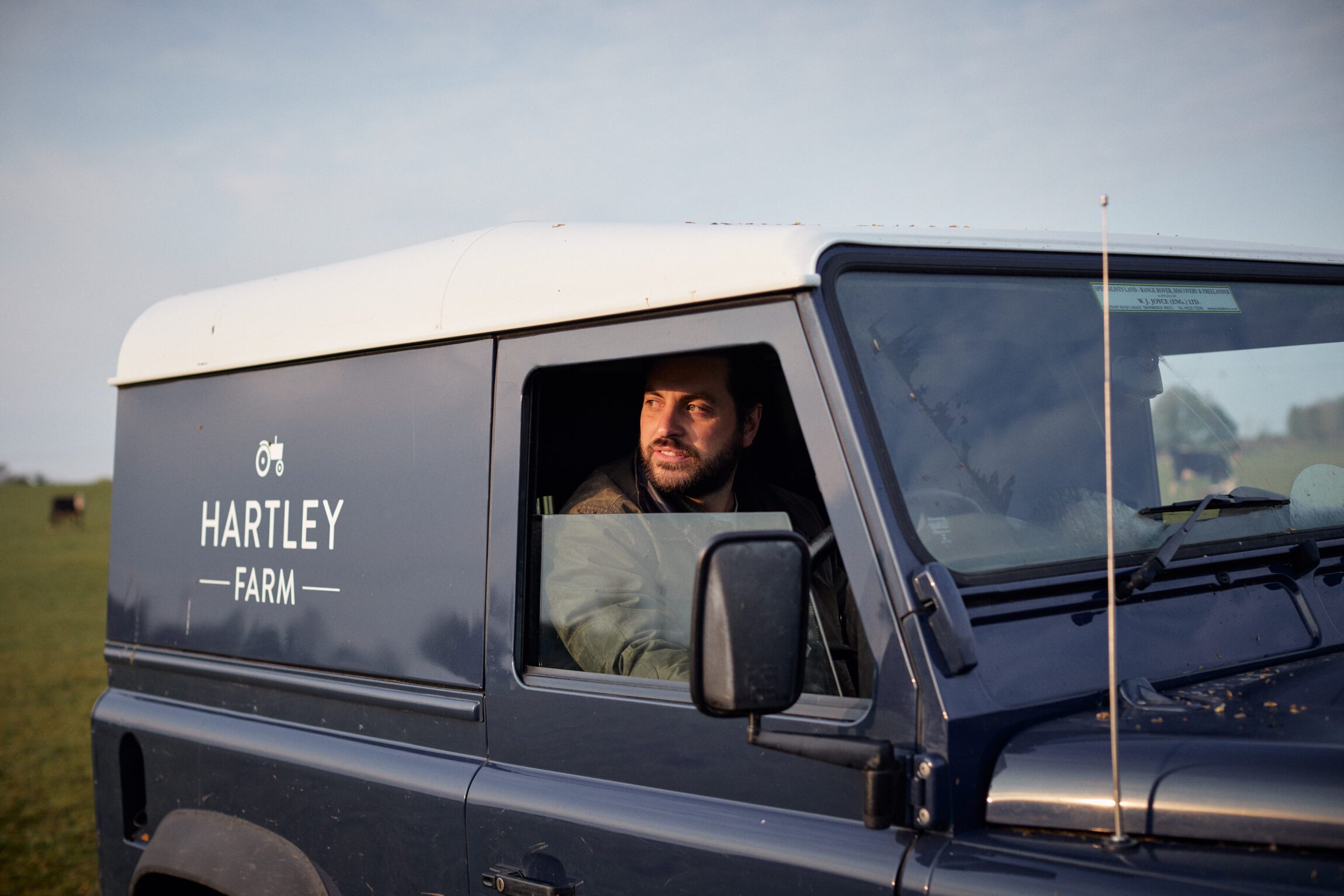
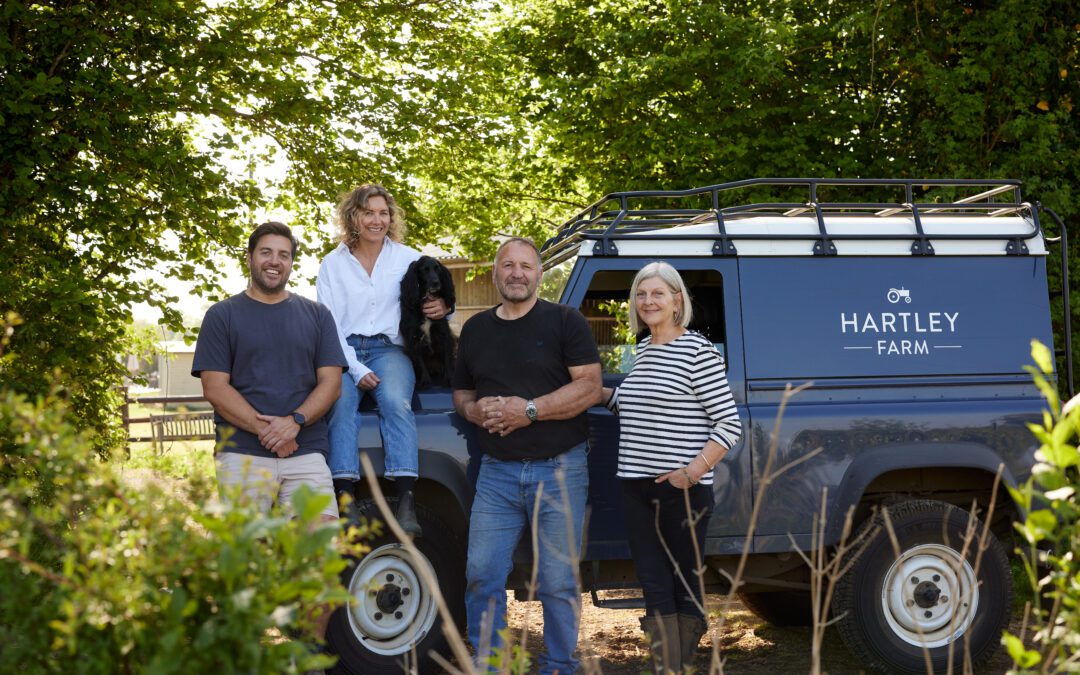
Kim and I raised our family here at Hartley. Our daughters Gemma and Abi eventually moved away before both returning to the area with their own families. Our son-in-law Dave is now part of the business too, looking after all things hospitality, while I have had the pleasure of working alongside Tom for the last 20 years as he has helped take the farm and wider business into the next generation.
Hartley today looks very different from the farm I arrived at in 1976. Alongside farming, it now includes the Farm Shop and Kitchen and is home to a community of other small businesses. But beneath all those changes, I think many of the important things remain the same.
We are still trying to look after a piece of land, produce good food, earn a living from it and hopefully leave something worthwhile for the generation that follows us.
My grandfathers would probably recognise that.
When I arrived here aged 20, I certainly wasn’t thinking about what Hartley might look like 50 years later. It is quite something to be able to look across the farm today and see another generation carrying it forward.
As old age starts to catch up with me, I’m increasingly reminded of the importance of looking back and learning from the past.
I grew up listening to farming stories from my grandfather and father, and it strikes me that many of the challenges they faced are not so different from those we face today, although perhaps they were more localised then.
On my very occasional visits to a supermarket, I’m always struck by how much of the food on the shelves has travelled from overseas. After 50 years in farming, it does make me wonder whether there are lessons from our past that are worth remembering when we think about where our food comes from and how secure that supply really is.
Thanks for reading, and for following along.
Rich